What Is the Average Cost of Tornado Damage to a Roof in Blanchard?
Two houses on the same street can come out of one storm with very different bills, and the reasons are worth knowing before you talk to anyone about money.
What is the average cost of tornado damage?
There is no meaningful average cost for tornado damage, because the damage itself ranges from a few lifted shingles to a roof deck that has to be rebuilt. Your cost depends on how much of the roof failed, what sits under the shingles, your roofing material, permits, and how your insurance policy handles wind. Talk it through at (572) 223-3406.
Why is there no single average cost for tornado damage?
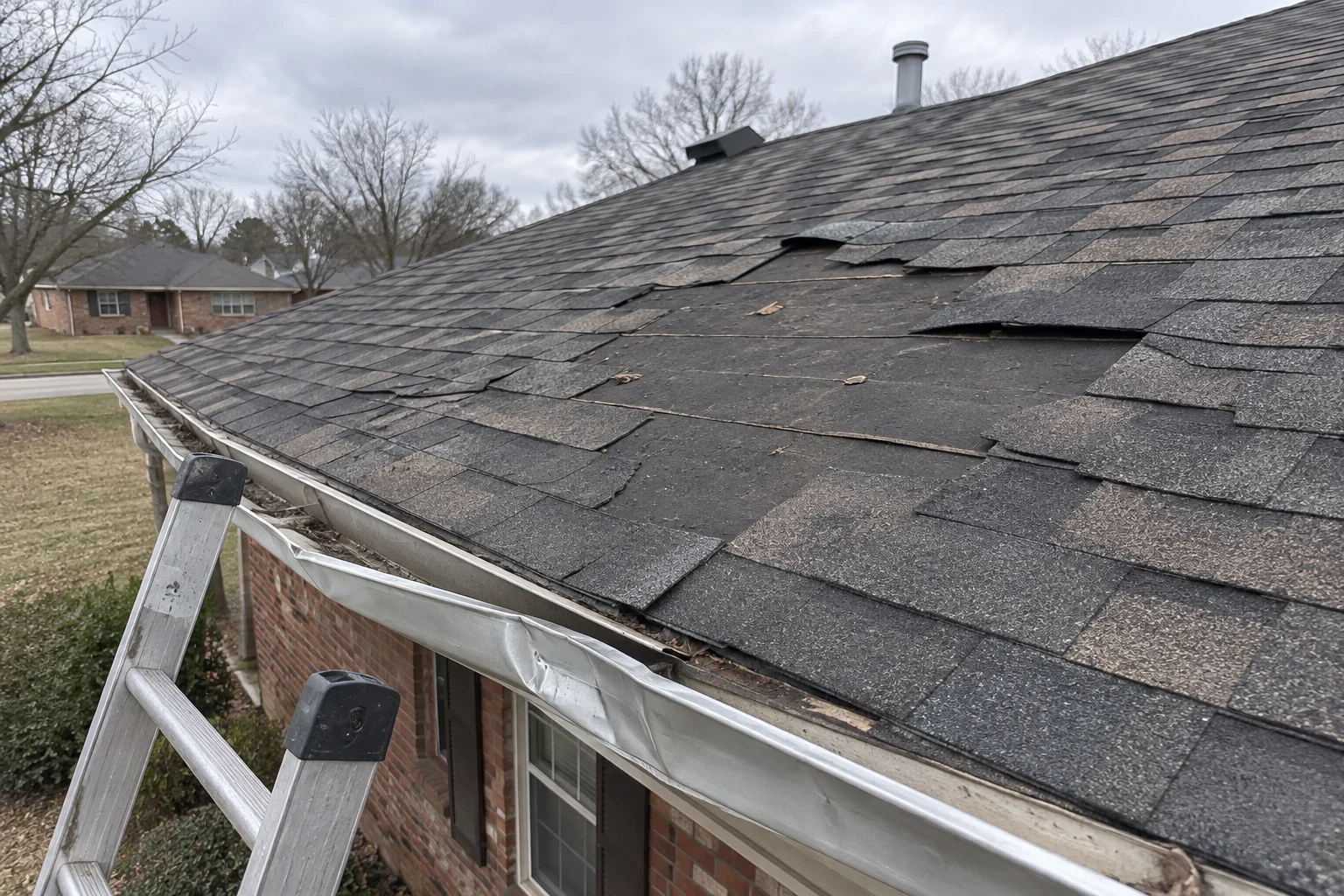
A tornado does not damage roofs evenly. A house near the path may lose half its shingles and some decking, while a house a few hundred yards away only has broken sealant strips and a dented gutter. Any average blends those two jobs together and tells you nothing about your own roof.
Wind also does different kinds of harm. Uplift pulls shingles loose at the nail line, flying debris punctures the field of the roof, and pressure changes can lift the edges at the drip edge and rake. Each of those failures is repaired a different way, with different labor and materials.
The roof is usually only one part of the picture. Siding, windows, fences and interior water damage are separate line items. On this site we can speak to the roof and gutters, which is where most of the water problems start.
What drives the cost of repairing a tornado-damaged roof?
When we write a line-item estimate after a storm, these are the items that move the number up or down. Most of them can only be judged from on the roof and, where needed, from the attic.
- How much of each slope is affected. Asphalt shingles seal to the course below with an adhesive strip. Once high wind breaks that bond across a whole slope, the shingles will keep lifting in every storm, even if none are missing yet.
- The condition of the decking. If water got in or debris cracked the OSB or plywood, those sheets have to be cut out and replaced before new underlayment and shingles go on.
- Flashing and penetrations. Pipe boots, vent caps, chimney and wall flashing, and ridge cap are often the first parts to tear loose, and each one needs proper replacement rather than a bead of sealant.
- Roof size, pitch and access. A steep roof or a two-story eave takes more safety setup and more labor hours than a low, single-story ranch.
- Your roofing material. Architectural shingles, three-tab shingles and metal panels each cost differently to repair, and discontinued products can make a small patch impossible to match.
- Gutters and fascia. Wind and debris bend gutter runs and pull hangers out of the fascia board, and rotted or split fascia has to be replaced before gutters can be rehung.
When does tornado damage mean repair, and when does it mean replacement?
A roof repair makes sense when the damage is limited to a few areas, the surrounding shingles are still flexible and sealed, and the replacement shingles match closely. On a newer roof with a handful of creased or missing tabs, that is often all it takes.
Replacement becomes the honest answer when the seal strips have failed across most of a slope, when the shingles are old enough to crack as we try to lift them for a repair, or when the decking took widespread damage. Patching a roof in that state just sets you up for another leak during the next spring storm season, and Oklahoma springs bring plenty of them.
We show you photos of what we found and explain which way we would go on our own house. If a repair will hold, we tell you so. A full roof replacement is a bigger decision, and you should see the evidence before you make it.
How does homeowners insurance affect what you actually pay?
For many homeowners, what comes out of pocket is mostly shaped by the policy. Many Oklahoma policies carry a separate wind and hail deductible, and some set it as a percentage of the dwelling coverage instead of a flat amount. It is worth reading that page of your policy before the adjuster visits.
Policies also differ in how they pay. A replacement cost policy may pay part of the claim first and release the rest, often called depreciation, once the work is finished. An actual cash value policy pays for the roof's depreciated value, which can leave a larger gap on an older roof. If code requires work your old roof never had, such as new drip edge or decking repairs, ordinance or law coverage may matter too.
We do not act as your adjuster and we do not tell you what your claim is worth. What we can do is document the roof with photos, write a clear line-item scope of the damage, and walk you through how the claim process usually goes so you know what questions to ask.
What should you do with your roof in the first days after a tornado?
Once the storm has passed and it is safe to be outside, start by protecting the inside of your home and recording what happened. Those first steps keep the bill from growing and make the insurance side easier.
Be cautious about anyone who knocks on your door right after a storm and asks you to sign that day. A neighbor deserves time to read the paperwork, compare the scope, and talk to their insurance company first.
- Take wide and close photos of the roof from the ground, plus any shingles, flashing or gutter pieces in the yard.
- Check the attic and ceilings for wet insulation, stains or drips, and move belongings out of the way.
- Cover open areas with a tarp only if it can be done safely from a ladder or by a roofer. Do not walk a wet or damaged roof.
- Keep receipts for tarps, temporary repairs and anything else you spend to prevent further damage.
- Call your insurance company to start the claim, and ask what documentation they want.
More questions about tornado roof damage
Something not covered here? (572) 223-3406
My roof looks fine from the ground. Could it still be damaged?
Yes. Broken seal strips, nail pull-through and small debris punctures are hard to see from the yard. A close roof inspection from the surface is the only reliable way to know.
Do I need a permit to repair tornado damage in Blanchard?
Small repairs often do not, but a full reroof usually does where the city requires one. When a permit is needed, we pull it as part of the job so the work is inspected and on record.
Are damaged gutters part of a storm roof claim?
Often they are, since bent runs and torn hangers come from the same wind event. We include gutter and fascia damage in the written scope so it is not missed.
How long do I have to report tornado damage to my insurer?
That depends on your policy, and the time limits vary. Reporting early is wise, because damage that leaks for weeks can be harder to tie to the storm.
Find out what your roof really needs
Tell us what you are seeing after the storm and we will set a time to look at your roof and gutters. You get photos of the damage, a plain answer on repair or replacement, and a written line-item scope you can share with your insurance company.