ServicesGutters
Gutters in Blanchard, Sized and Hung to Drain
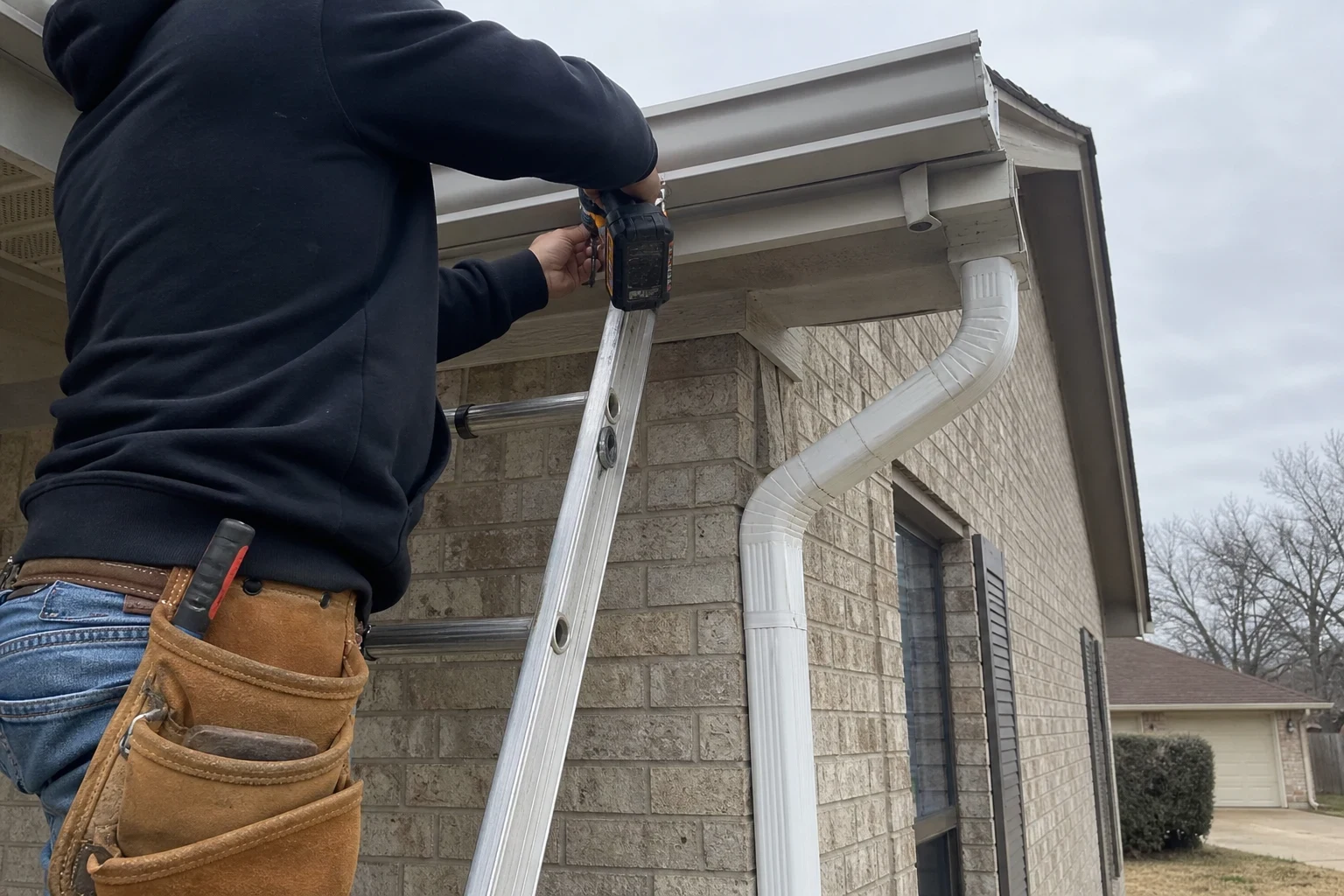
We install continuous aluminum gutters, rehang sagging runs and fix leaking seams and downspouts. Every run is sized to the roof above it and pitched so water leaves your home at the corners, not over the edge, down the siding or into the soil against your foundation.
Gutters Are the Last Part of the Roof
A roof sheds water, but the gutter decides where that water goes. When a run is undersized, flat or clogged, rain spills behind it and soaks the fascia board, the soffit and the top of the siding. Over a few seasons that turns into rotted wood, peeling paint and soil washing out beside the slab.
Because we work from the roof down, we look at the drip edge, the shingle overhang and the valleys that feed each gutter before we hang anything. The same people who flash a roof edge set the gutter beneath it, so the two parts are built to work together.
We treat your place the way we would a neighbor's: we explain what failed and why, and we fix that before suggesting anything bigger.
What Our Gutter Work Covers
Continuous runs formed on site
We roll K-style aluminum gutters from coil at your home, cut to the exact length of each wall. With no joints along the run, the only seams are at corners and end caps, which is where we seal.
Correct size for the roof area
A steep roof or a long valley dumps more water than a standard 5-inch gutter can carry in a hard storm. We measure the roof area draining to each run and step up to 6-inch gutters and 3x4 downspouts where the volume calls for it.
Hidden hangers and proper pitch
Hangers are screwed into the rafter tails through the fascia, spaced closely enough to hold a gutter full of water or wet leaves. We set a slight, steady fall toward each outlet so water never sits in the trough.
Downspouts that discharge away
We place downspouts where the water can be carried off, then add extensions or splash blocks so the flow lands clear of the foundation.
Repairs to existing gutters
Leaking miters, pulled-out spikes, crushed downspouts and backward pitch can usually be fixed without replacing the whole system. We reseal, rehang and repitch where the metal is still sound.
Signs Your Gutters Need Attention
- Water sheets over the front edge
- In a steady rain, a gutter that overflows mid-run is either clogged, too small or pitched the wrong way. Each has a different fix, so we check all three.
- The run sags or pulls away
- Old spike-and-ferrule fasteners work loose as the wood shrinks and swells. A sagging section holds standing water, which adds weight and pulls it down further.
- Stained or soft fascia
- Dark streaks or soft, spongy wood behind the gutter mean water is getting between the gutter and the board, often because the drip edge or gutter apron is missing.
- Drips at corners and end caps
- Sealant at the joints dries and cracks after years of sun and cold. A steady drip at a corner usually means a failed seal rather than a failed gutter.
- Washed-out soil or puddles by the slab
- Trenches under the eaves or pooling beside the foundation tell us water is coming off the roof in the wrong place, even if the gutters look fine from the yard.
How a Gutter Job Runs
- 1
Look at the roof edge first
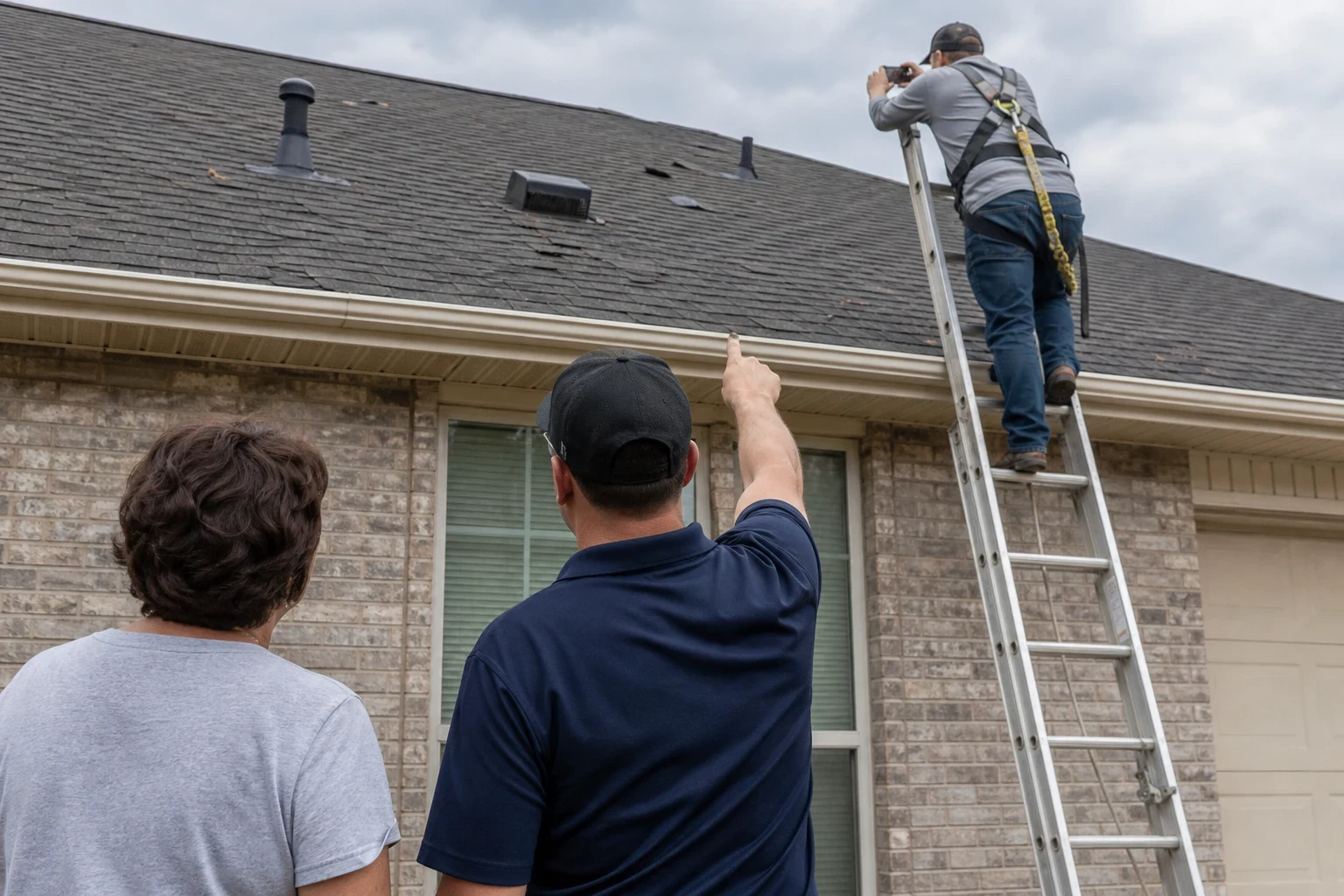
We walk the perimeter, check the fascia for rot, confirm the drip edge, and note where valleys concentrate water. You get a plain explanation of what we found.
- 2
Measure and quote the job
We measure every run and downspout drop, then give you a written, line-item quote that separates new gutters, repairs and any fascia board replacement.
- 3
Install on the day
Rotted fascia is replaced before anything is hung. We form the gutters on site, set the hangers and pitch, seal the corners and attach downspouts, usually within a single day for a typical house.
- 4
Water test and cleanup
We run water through each run to confirm it drains to the outlet, then pick up offcuts, screws and old metal before we leave.
What Moves the Price of Gutters
Gutter pricing comes down to how much metal goes up and what has to be fixed behind it. We quote after measuring your home, and the written quote shows each part separately so you can see where the money goes.
- Linear footage and downspouts
- Total run length and the number of downspout drops set the base of the job. More corners mean more miters to cut and seal.
- Gutter size
- Moving from 5-inch to 6-inch gutters with larger downspouts costs more in material but can stop overflow that keeps damaging the fascia.
- Fascia and roof edge condition
- Rotted fascia board or a missing drip edge has to be corrected first, or the new gutter will fail at the same spot.
- Height and access
- Two-story walls, steep slopes and tight side yards take more ladder work and setup time than a single-story ranch.
Common Questions About Gutters
- Do my gutters need fixing or a full replacement?
- When the metal is straight and the trouble is a leaky seam, loose hangers or the wrong slope, a repair usually solves it. We recommend new gutters when the old ones are sectional with lots of joints, too small for the roof, or bent and corroded over long runs. We'll show you which case you're in.
- My gutters are clean. Why do they still overflow?
- Usually the gutter is undersized for the roof draining into it, or a valley sends water at a single spot. A slope running the wrong way or not enough downspouts can look the same. A larger gutter or an extra outlet takes care of it.
- Can you fix rotted fascia board?
- Yes. Soft or rotted fascia gets replaced before the new gutters go up, because hangers only hold in sound wood. Fascia work shows up as a separate line on your quote.
- Should gutters go in along with a new roof?
- Often that's the ideal timing. With the roof being replaced, we can put on new drip edge and then hang gutters that fit the finished edge, so nothing has to be redone later.
Get Water Off Your Roof and Away From Your Home
We bring 30+ years of roofing experience to every gutter job, and we start by finding why water is going where it shouldn't. Give us a ring and we will set a time to look at your roof edge.