ServicesRoof Inspections
Roof Inspections in Blanchard
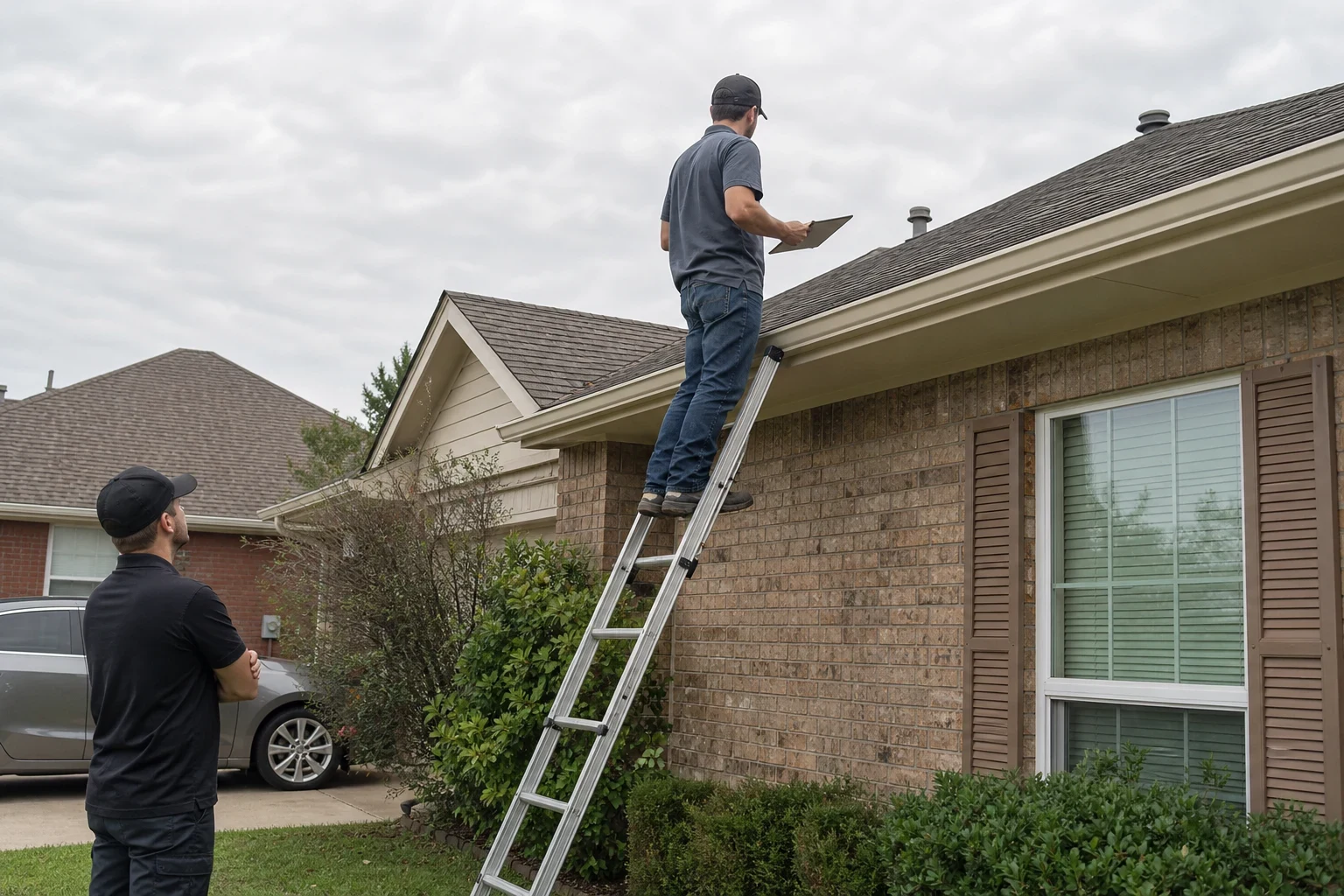
We walk your roof and look in your attic, then tell you what we found in plain terms: what is worn, what is damaged and what can wait. You get photos and a written summary, plus an honest read on whether anything needs repair at all.
Why a Roof Inspection Is Worth Doing
Roof trouble usually begins somewhere you can't see from the yard. A split rubber collar on a plumbing vent, one shingle tab that has lifted or step flashing working loose from a wall can feed water into the decking for months before any mark appears on a ceiling. Catching those spots during an inspection keeps the fix small and inexpensive.
Every inspection draws on our 30+ years of roofing experience. We go over your roof as if it were on our own house, working from the ridge to the drip edge on top and then checking the same areas from inside the attic.
You get an accurate picture, not a pitch. A roof in good shape gets told it's in good shape. One that needs roof repair gets the exact spot and the reason. One that's close to worn out gets an explanation of the evidence that brought us to that conclusion.
The Parts of Your Roof We Look At
The shingles themselves
We watch for bare spots where granules have washed off, cracks, curled edges, blisters and tabs creased by wind. On asphalt roofs we press on questionable areas to find the soft, broken mat that a hail strike leaves.
Flashing and roof openings
Most leaks start at step flashing, chimney flashing, valley metal or the boots around vent pipes. We confirm each one is fastened, sealed and overlapped in the right order so water flows over it rather than behind it.
Attic side and decking
Up in the attic we check for light showing through nail holes, dark streaks on the sheathing, rusty nail points and wet insulation. Any decking that feels soft while we walk the roof goes in the notes as well.
Attic airflow
We weigh the air coming in at the soffits against the air leaving at the ridge or roof vents. When that balance is off, summer heat bakes the shingles from underneath and winter brings condensation.
Gutters and water flow
A blocked or sagging gutter pushes water back under the drip edge and rots the fascia. We look at the pitch, the fasteners and where each downspout empties.
Pictures and written notes
Each problem we find is photographed and paired with a brief note on what caused it and how soon it needs attention, so you see exactly what we saw up there.
When It Is Time to Have Your Roof Inspected
- Hail or high wind just passed
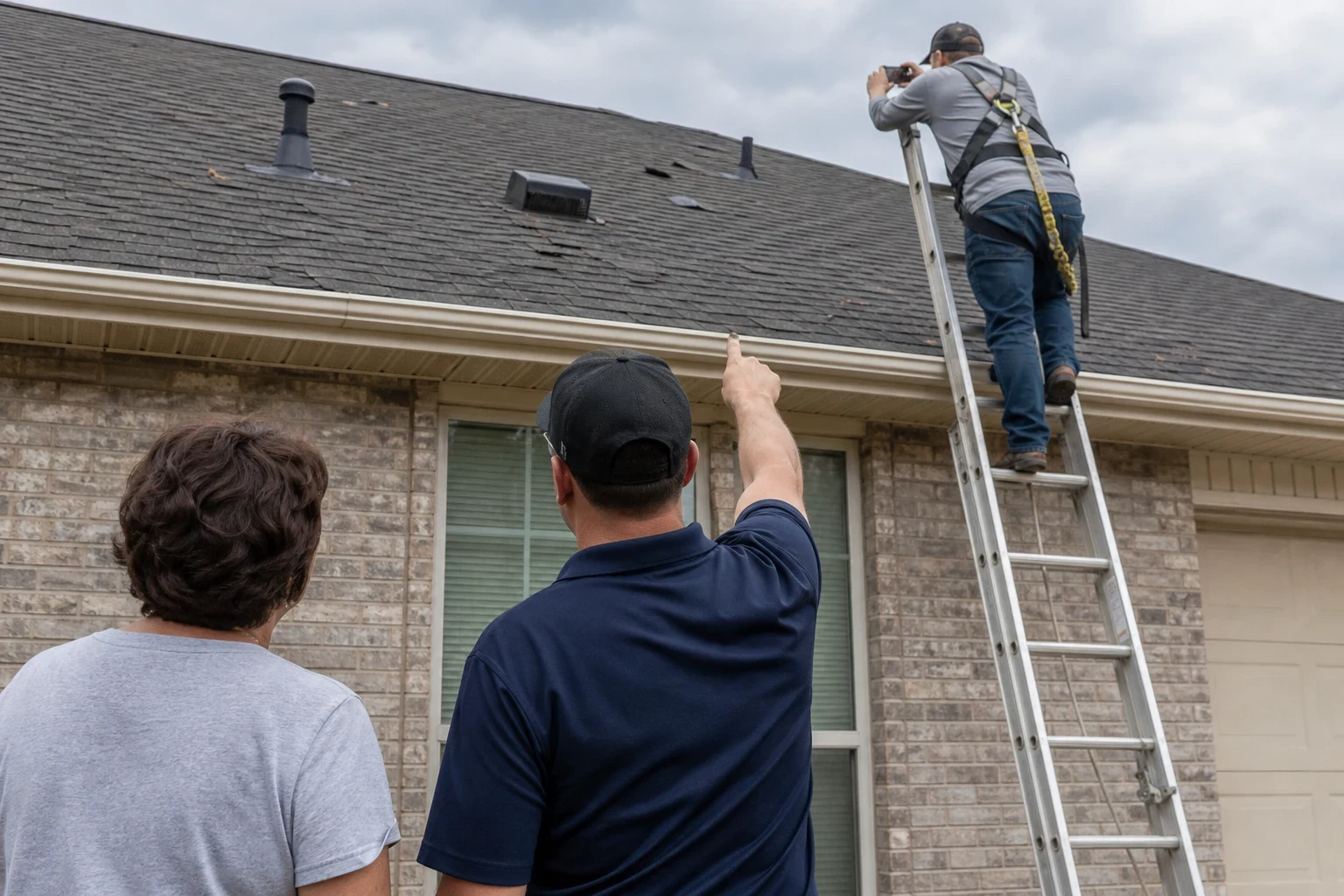
- Hail bruises often cannot be seen from the ground, and wind can break the seal strip on shingles without tearing them off. A look soon after a storm documents damage while it is fresh. If we find real damage, our storm damage repair page explains the next steps.
- Your roof is 15 years or older
- Asphalt shingles lose flexibility and granules with age. A mid-life check tells you how much service is left so you can plan instead of react.
- Stains or musty smells indoors
- A brown ring on a ceiling or a damp smell in a closet usually means water has been getting in for a while. Tracing it from the roof down finds the actual entry point.
- Granules in the gutters
- A handful of grit is normal on a new roof. Heavy buildup on an older one means the shingles are wearing through their protective layer.
- Buying or selling a home
- An independent look at the roof gives you facts for the negotiation instead of guesses.
How Inspection Day Runs
- 1
Schedule by phone
We ask about your roof's age, any leaks you have noticed and recent storms, then set a time that works for you.
- 2
Ground walk
We start around the outside of your home, checking gutters, fascia, soffit vents and the roofline for sagging or uneven planes.
- 3
On the roof
If the pitch and weather allow safe footing, we walk every slope, checking shingles, flashing, valleys, vents and the ridge. Steep or fragile roofs are checked from the ladder and eaves instead.
- 4
In the attic
With your permission we go up through the attic access to look at the underside of the decking, the insulation and the ventilation path.
- 5
Review with you
We go through the photos, explain each finding and tell you what is urgent, what to watch and what is fine.
What Affects the Cost of an Inspection
An inspection is mostly time on the roof and in the attic, so the price follows how long a careful look takes. We tell you the cost on the phone before we schedule, so there is no surprise when we arrive.
- Roof size and layout
- A simple gable roof goes quickly. Multiple hips, valleys, dormers and skylights mean more flashing and more ground to cover.
- Pitch and height
- Steep slopes and two-story homes need extra safety setup and slow the work down.
- Attic access
- A walkable attic with a pull-down ladder is quick. Tight crawl spaces or blown-in insulation over the joists take longer to check safely.
- Purpose of the report
- A routine check needs less detail than a summary prepared for a home sale or an insurance claim, which calls for more photos and measurements.
Questions About Our Roof Inspections
- How much time does an inspection take?
- Plan on roughly an hour to an hour and a half. A bigger or steeper roof, or an attic that's hard to get into, adds to that. Before we leave, we sit down with you and go over what we found.
- Does someone need to be at the house?
- It's useful, mostly so we can get into the attic and walk you through the findings. If you're away, we can check the outside, send you the photos and notes, and return another time for the attic.
- Is the inspection a way to sell me a roof?
- No. Plenty of inspections end with a clean bill of health or a few minor repairs. Replacement only comes up when the photos show wear spread across the roof that a repair can't solve.
- Will you help if I'm filing an insurance claim?
- We photograph the damage and describe it in plain language you can pass along to your insurer. Coverage is the adjuster's call, but we can explain how a claim typically moves along.
- How often should a roof get inspected?
- A healthy roof needs a look every few years and again after any serious hail or wind. An older roof is worth checking once a year.
Learn What Shape Your Roof Is In
One short visit gets you photos, straight answers and a clear idea of what comes next for your roof. We work in Blanchard and nearby towns such as Newcastle, Tuttle and Goldsby.