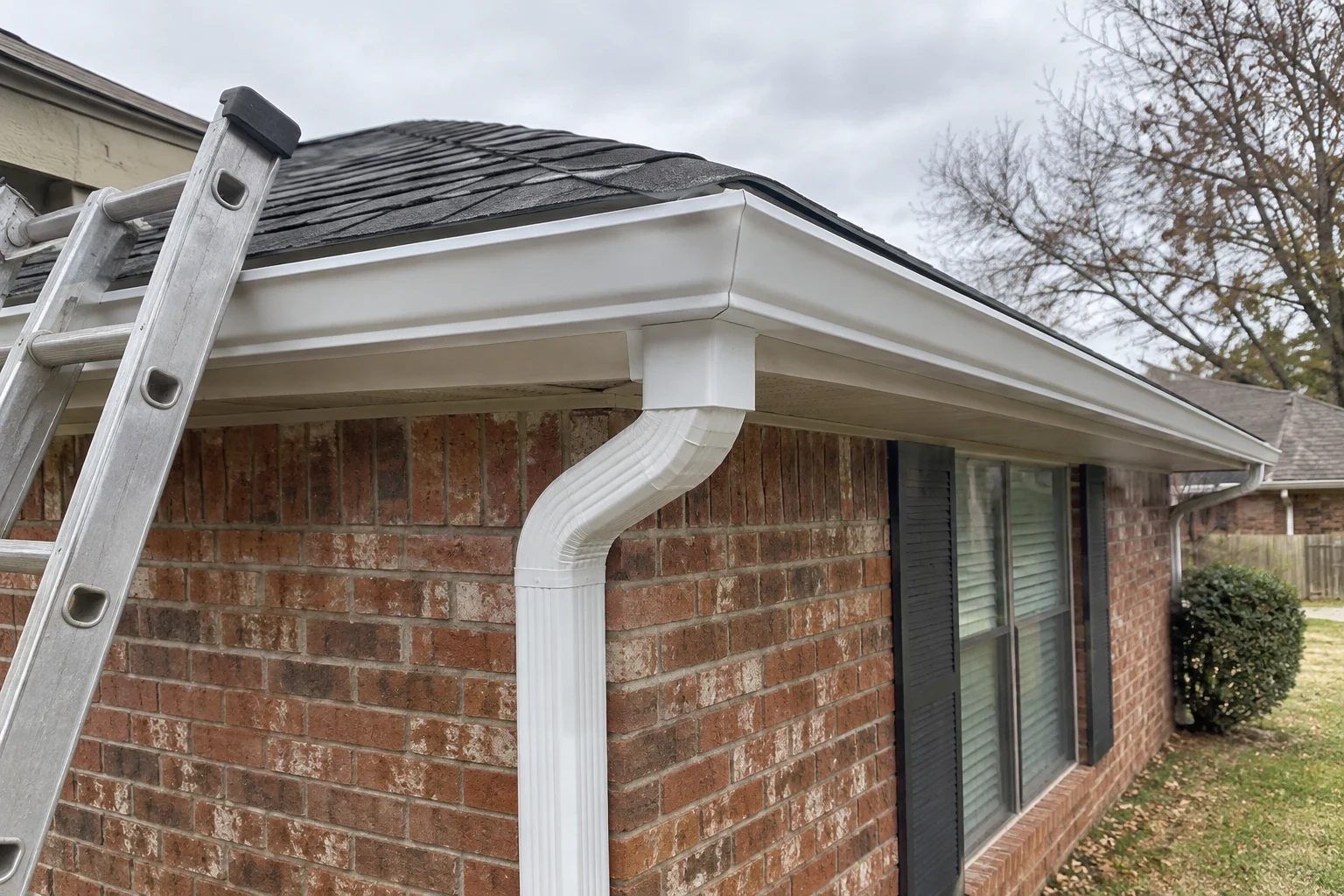
How Much Is a 6 Inch Gutter in Blanchard?
A 6-inch gutter is priced by the installed run, not the piece, and a handful of details on your home decide where that number lands.
How much is a 6 inch gutter?
A 6-inch gutter costs more per foot than a standard 5-inch gutter, because it uses a wider metal coil and usually pairs with larger 3x4 downspouts. Your total depends on linear footage, metal gauge, number of corners and downspouts, roof height, and whether the fascia behind it is sound. Get your quote by phone at (572) 223-3406.
What changes the price of a 6-inch gutter run
Most of the cost sits in the installed system, not the trough itself. A 6-inch K-style gutter is formed from a wider coil than a 5-inch one, so the metal costs a bit more per foot. The bigger swings come from how your house is shaped and what we find when the old gutters come down.
Here is what moves the number on a typical job:
- Linear footage around the eaves, measured on the roof edge, not from the ground.
- Corners and miters. Every inside or outside corner adds a joint that has to be cut, riveted and sealed.
- Downspouts. 6-inch gutters usually run 3x4 downspouts, and each one needs an outlet, elbows, straps and somewhere to discharge.
- Roof height and access. A second-story eave or a steep lot means taller ladders, more setup and slower work.
- Removal and haul-off of the old gutters, plus any rotted fascia or missing drip edge we have to fix before hanging new metal.
- Add-ons such as gutter guards, splash blocks or underground drain connections.
Do you actually need 6-inch gutters, or will 5-inch do?
Size should follow water volume, not looks. A 6-inch gutter carries roughly half again as much water as a 5-inch one, which matters when a large or steep roof plane drains to a single eave. Valleys are the usual trouble spot: two roof slopes meet, concentrate their runoff, and send a sheet of water over the front lip of a 5-inch gutter during a hard storm.
Central Oklahoma gets heavy spring thunderstorms that drop a lot of rain in a short window, so overflow at valleys and long eave runs is common. If you see water pouring over the gutter at one corner, staining on the siding below, or soil washed out along the foundation, the gutter or its downspouts are undersized for that section.
On a smaller ranch-style roof with a low pitch, a well-pitched 5-inch system with enough downspouts can work fine. We tell you which one your roof needs and why, and we will not push the larger size if the math does not call for it.
Material and gauge: where the price per foot comes from
Aluminum is the standard for 6-inch residential gutters. We roll it to length on site from a coil, so each run is one continuous piece from corner to corner with no mid-span joints to open up and drip. The thickness of that coil matters. Thicker aluminum, around .032 inch, resists sagging under ice and the dents that come with hail better than thin .027 inch stock, and it costs more.
Steel and copper are options too. Steel is stiff but needs its coating intact to hold off rust, and copper is a premium choice mostly used for appearance. Half-round profiles cost more than K-style because the hangers and fittings are more specialized.
Hangers count as well. We use hidden hangers screwed into the rafter tails through the fascia, spaced closer on 6-inch gutters because a full trough of water and debris is heavy. Spacing them too far apart is a common shortcut, and it shows up later as a gutter that bows and holds standing water.
What is behind the gutter can change the quote
A gutter is only as solid as the board it hangs on. When old gutters overflow for years, water soaks the fascia and the ends of the roof decking, and the wood softens. Screws will not hold in rotted fascia, so that board has to be replaced before new gutters go up. We cannot always see it from the ground, which is why we check once the old system is off and show you photos before doing any added work.
We also look at the drip edge, the metal flashing at the roof edge that directs water into the gutter. If it is missing or bent, water runs behind the gutter and down the fascia no matter how big the trough is. If the shingles along the eave are worn or lifting, we will point that out too, and our roof repair work can handle it at the same visit.
- Rotted or split fascia boards
- Missing, bent or short drip edge
- Damaged shingles or decking at the eave
- Downspouts that dump against the foundation
How a 6-inch gutter job runs
We start by measuring every eave, counting corners and planning downspout locations so the water leaves where your yard can handle it. On install day we take down and haul off the old gutters, repair any fascia or drip edge issues you approved, then form each run on site, set the slope toward the outlets and seal every corner and end cap.
We finish by running water through the system to confirm it drains, then clean up the cut-offs, old screws and debris. You get a walk-around before we leave, so you can see the outlets, the hanger spacing and where each downspout discharges.
More questions about 6-inch gutters
Something not covered here? (572) 223-3406
Can I keep 5-inch gutters and just add bigger downspouts?
Sometimes. Switching to 3x4 downspouts or adding an extra outlet can fix overflow on a run that drains too slowly, but it will not help a valley that sends more water than a 5-inch trough can hold.
Do 6-inch gutters look too big on a house?
On most one- and two-story homes they read as normal trim from the street, especially in a color matched to the fascia. The difference is about an inch of face height.
Will gutter guards fit 6-inch gutters?
Yes, guards are made in 6-inch widths. They add to the cost but cut down on clogging from leaves and shingle granules, which helps if you have trees close to the roof.
Can you mix 5-inch and 6-inch gutters on one house?
Yes. We can put 6-inch gutters only on the eaves below valleys or large roof planes and keep 5-inch on the rest, which keeps the cost tied to where the water actually goes.
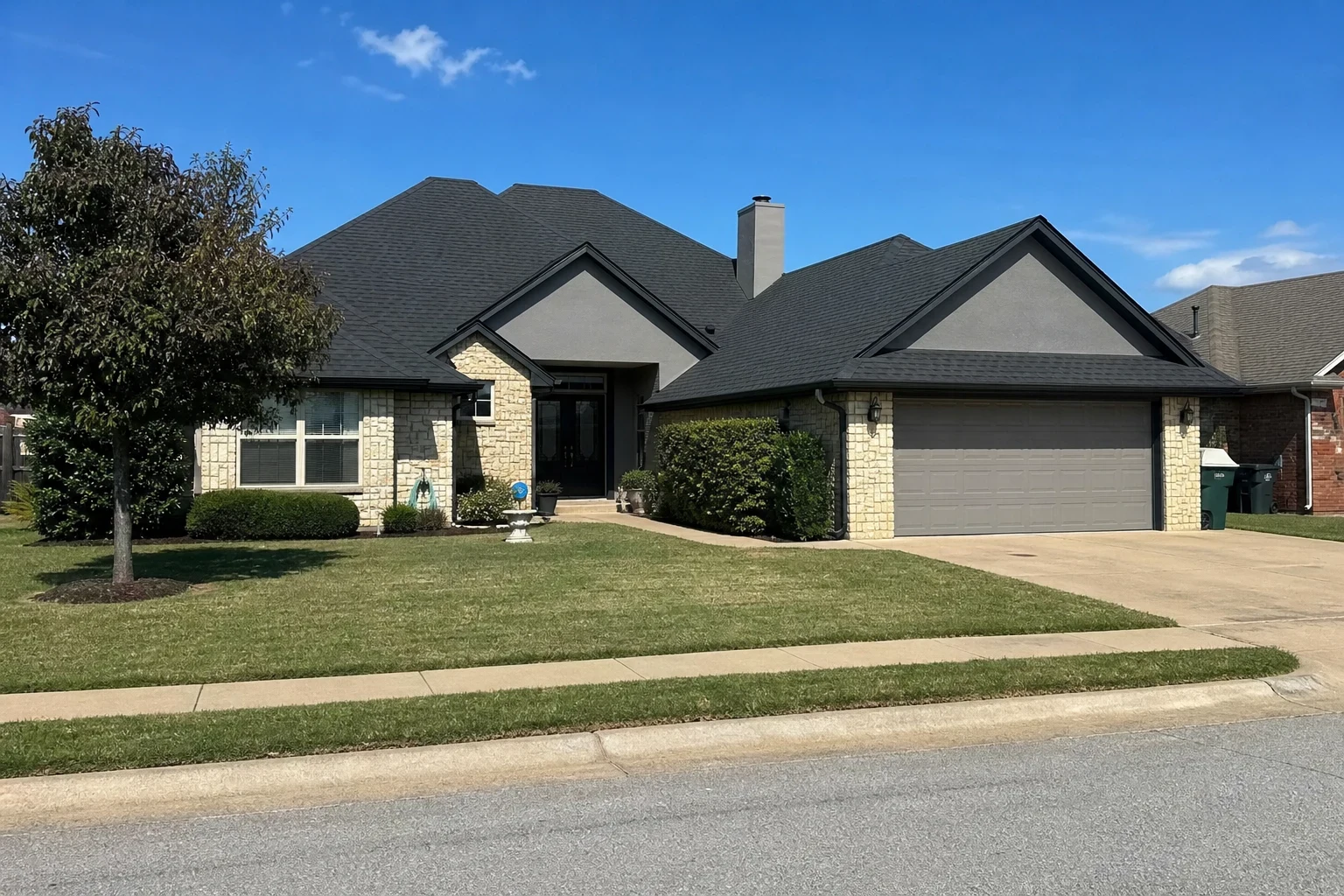
Find out what size and setup your home needs
Tell us about your roof and where the water is overflowing, and we will walk through gutter size, downspout placement and what affects your price, then set up a time to measure.