How Much Does It Cost to Have My Roof Inspected in Blanchard?
The price comes down to your roof, how hard it is to reach and how much detail you need, so here is how each piece works.
How much does it cost to have my roof inspected?
The cost of a roof inspection depends on your roof's size, pitch, material and access, plus whether you need a quick exterior check or a full inspection with attic review and a photo report. Because those vary from house to house, we give you the price by phone after a few questions. Reach us at (572) 223-3406.
What sets the price of a roof inspection?
An inspector is paying for time on the roof and in the attic, and that time changes a lot from one house to the next. A low, simple gable roof can be walked and checked quickly. A steep roof with several valleys, dormers and a chimney takes longer and needs more safety setup.
These are the factors that move the number most:
- Size and number of roof planes: more facets mean more valleys, hips and flashing joints to check.
- Pitch and height: steep or two-story roofs need harnesses or extra ladder work, and some cannot be walked safely at all.
- Roofing material: asphalt shingles are walked and checked by hand, while metal panels call for close attention to fasteners and seams.
- Attic access: a clear hatch lets us check decking and ventilation from below, and a blocked or missing hatch adds time.
- Scope of the report: a verbal walkthrough costs less effort than a documented report with labeled photos you can hand to an insurer or a buyer.
- Timing: inspections after a big hailstorm get booked up across the area, so scheduling a few days out helps.
What does a roof inspection actually include?
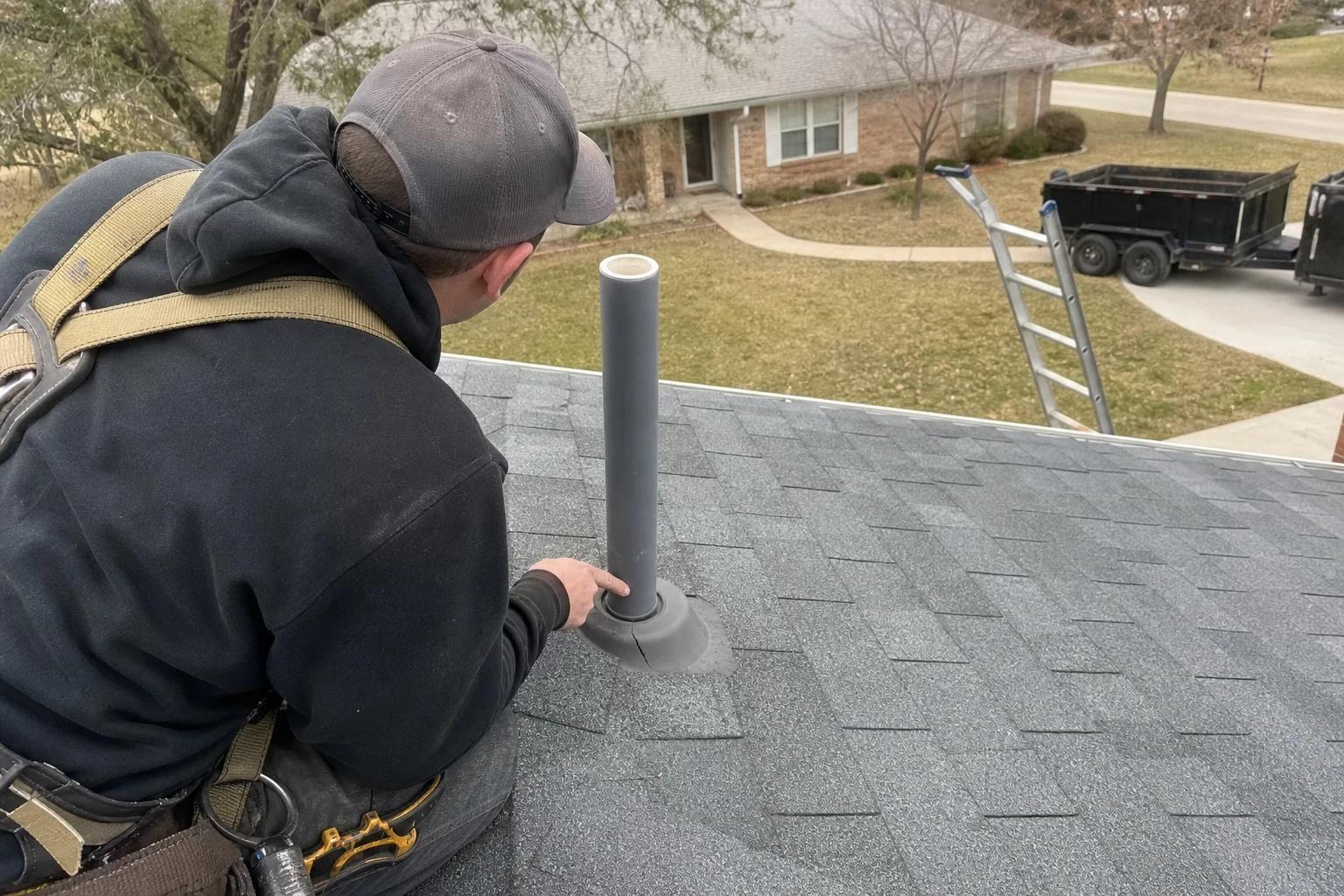
A real inspection looks at the roof as a system, not just the shingles you can see from the yard. On top, we check shingles for granule loss, hail bruising that softens the mat, and tabs creased or lifted by wind. We look at the metal and seals where water likes to get in: step flashing along walls, chimney counterflashing, valley metal and the rubber pipe boots around plumbing vents, which crack after years of hard summer sun.
Inside the attic, we look for daylight through the deck, dark staining on rafters and sheathing, soft or delaminated plywood and signs of poor ventilation like rusted nails or frost marks. Ridge vents and soffit intakes have to work together, and when they do not, heat cooks shingles from underneath.
We finish at the edges. Drip edge, fascia boards and gutters show whether water is leaving the roof the way it should, and clogged or sagging gutters often explain rot that looks like a roof leak.
When is a roof inspection worth paying for?
An inspection earns its cost when it settles a decision you would otherwise guess at. Central Oklahoma's spring hail and wind seasons are the most common reason people call, since hail bruises are hard to see from the ground and can shorten a roof's life well before it leaks.
Other times it is money well spent:
- After a hailstorm or high winds, before you file or skip an insurance claim.
- When buying or selling a house, so the roof's condition is on paper.
- When a roof passes about 15 years and you want to know how much life is left.
- When you see a ceiling stain, a drip in the attic or shingles in the yard.
- Before deciding between roof repair and full replacement.
How can you get the most from the visit?
A little prep shortens the visit and sharpens the findings. Clear a path to the attic hatch and move anything stored right below it. If you have had leaks, note where and when they showed up, since a drip that appears only in wind-driven rain points to a different cause than one that shows up in every storm.
It also helps to know your roof's age, any past repairs and whether a claim was filed before. If you plan to talk to your insurer, have your policy handy so you know what documentation they want. We can explain how the claim process usually runs, but the adjuster decides coverage.
What happens after the inspection?
We walk you through what we found with photos, so you see the cracked pipe boot or the bruised shingle yourself instead of taking our word for it. Then we give you a straight answer: leave it alone for now, make a targeted repair, or start planning a replacement.
If work is needed, you get a written estimate broken down by line item. Nobody should feel pushed into a new roof when a few hundred square inches of flashing would do the job, and we treat your roof the way we would want a neighbor to treat ours.
More questions about roof inspections
Something not covered here? (572) 223-3406
How long does a roof inspection take?
Most visits run an hour or two on site. Large, steep or complicated roofs and inspections that need a full photo report take longer.
Do I need to be home?
For the roof itself, no. If you want the attic checked, someone needs to let us in, and being there lets us show you what we found right away.
Can I inspect my own roof?
You can scan it from the ground with binoculars for missing shingles, sagging lines or loose flashing. Walking it yourself is risky and can damage hail-softened shingles, so leave the close look to someone with the right gear.
Will an inspection tell me if insurance will pay?
It tells you what damage is there and documents it with photos. Whether it is covered is the adjuster's call under your policy.
Find out what your inspection will cost
Tell us about your roof's size, pitch and any leaks you have noticed, and we will give you the inspection price over the phone and set up a time that works for you.